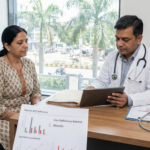
Patient’s Problem
A 34-year-old male, Mr. Ronak (name changed to maintain privacy), came to Shivaay Hospicare with a four-day history of high fever, chills, and heavy sweating. His fever came in cycles, sudden chills and a sharp temperature rise, followed by intense sweating. Along with this, he complained of headaches, fatigue, body aches, mild nausea, and loss of appetite.
Diagnosis
Based on his symptoms, travel history, and physical findings, the doctor suspected malaria. His examination showed high fever, increased heart rate, pale conjunctiva, and mild splenomegaly.
Key Findings:
Physical Exam:
He appeared ill during fever spikes, with a temperature of 39.4°C, a rapid heart rate, and mild enlargement of the spleen. No neurological or respiratory red flags were present.
Laboratory Tests:
- Hemoglobin: 10.4 g/dL (mild anemia)
- Platelets: 115,000/µL (mild thrombocytopenia)
- Liver enzymes: Slightly elevated
- WBC count: Normal
- G6PD level: Normal
Malaria Tests:
- Rapid Diagnostic Test: Positive for Plasmodium vivax
- Peripheral Smear: Enlarged RBCs, ring forms, Schüffner’s dots are classic features of P. vivax
These findings confirmed the diagnosis of uncomplicated Plasmodium vivax malaria.
Treatment
Mr. Ronak was started on antimalarial therapy at Shivaay Hospicare.
Blood-Stage Treatment:
He received antimalarial medication as per guidelines. Since P. vivax can cause repeated infections, clearing the active parasites is the first step.
Liver-Stage Treatment (to prevent relapse):
Because P. vivax hides in the liver, he was prescribed primaquine 30 mg daily for 14 days after confirming normal G6PD levels.
Supportive Care:
- Paracetamol for fever
- Adequate hydration
- Monitoring of blood counts
- Follow-up smear to ensure complete clearance
This approach follows the standard care provided by experienced lady doctors in Vadodara and women general surgeons managing infectious diseases at Shivaay Hospicare.
Result
Within 48 hours of starting treatment, his fever subsided, and the chills and headaches eased. His blood counts stabilized gradually, and he regained his appetite and strength.
By his one-month follow-up, he had:
- No fever or malaria symptoms
- Completed the full course of primaquine
- No relapse or complications
The prognosis is excellent when treatment is completed properly. Without liver-stage therapy, P. vivax malaria has a high risk of returning, but in his case, the timely diagnosis and complete treatment prevented recurrence.
Note: This case study is for illustrative purposes only and should not replace professional medical advice. If you have concerns about your health, please consult with a qualified healthcare provider.




 Designed by Rang Digitech LLC.