Difference Between URTI and LRTI Explained by a General Physician
Respiratory infections are among the most common reasons people visit a doctor. Many patients often hear terms like URTI and LRTI but may not clearly understand what they mean or how they differ. Knowing the difference helps in early treatment, proper care, and prevention of complications.
A general physician regularly diagnoses and treats both conditions. If you are looking for the best general physician in Vadodara, understanding these infections can help you recognize symptoms early and seek medical advice on time.
What Is URTI
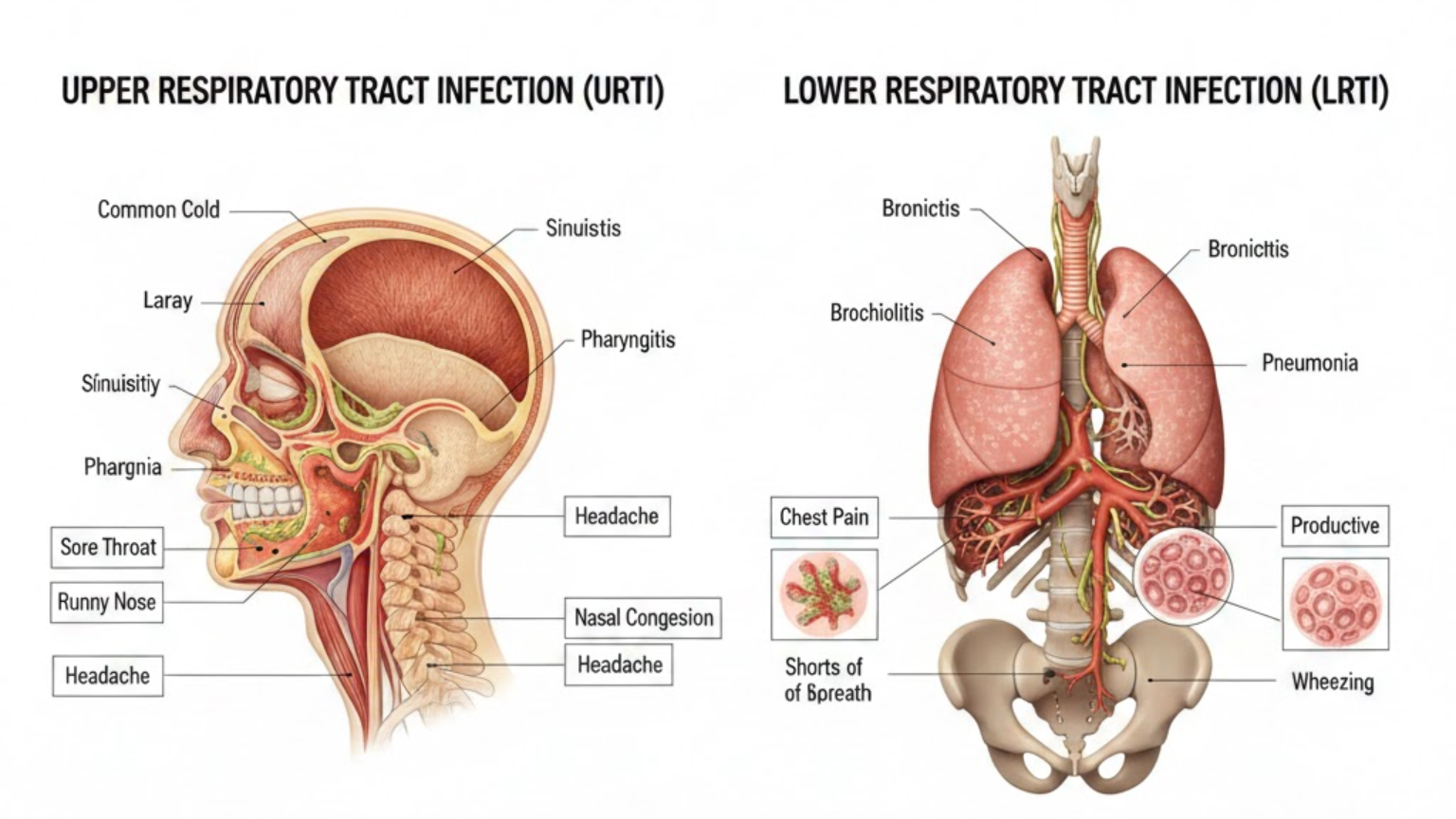
URTI stands for Upper Respiratory Tract Infection. It affects the upper part of the respiratory system. This includes the nose, sinuses, throat, and voice box.
Common examples of URTI include the common cold, sinus infection, tonsillitis, and pharyngitis.
Common Symptoms of URTI
- Runny or blocked nose
- Sneezing
- Sore throat
- Mild cough
- Fever in some cases
- Headache or facial pressure
- Mild body ache
URTI is usually caused by viruses. Most cases are mild and improve within a few days with rest, fluids, and basic treatment advised by a doctor.
However, ignoring symptoms or self-medicating repeatedly can sometimes lead to complications, especially in children, elderly people, and patients with low immunity.
What Is LRTI
LRTI stands for Lower Respiratory Tract Infection. It affects the lower part of the respiratory system. This includes the windpipe, bronchi, and lungs.
Common examples include bronchitis, bronchiolitis, and pneumonia.
Common Symptoms of LRTI
- Persistent or severe cough
- Breathlessness
- Chest pain
- High fever
- A wheezing sound while breathing
- Thick mucus or phlegm
- Fatigue and weakness
LRTI is generally more serious than URTI. It may be caused by viruses, bacteria, or sometimes fungi. Many cases require medical treatment such as antibiotics, inhalation therapy, or even hospital care, depending on severity.
A consultation with a top 10 consultant physician in Vadodara is important if symptoms are severe or do not improve.
Key Difference Between URTI and LRTI
Understanding the basic differences helps patients respond appropriately.
Location of Infection
URTI affects the upper respiratory passages, like the nose and throat.
LRTI affects deeper structures such as the lungs and airways.
Severity
URTI is usually mild and self-limiting.
LRTI is more serious and may need intensive medical treatment.
Breathing Difficulty
URTI rarely causes breathing problems.
LRTI commonly causes breathlessness and chest discomfort.
Duration
URTI generally improves within a week.
LRTI may last longer and can worsen without treatment.
Risk of Complications
URTI complications are less common.
LRTI can lead to pneumonia, respiratory failure, or hospitalization if untreated.
Who Is at Higher Risk of LRTI
Some people are more vulnerable and need extra care.
- Children under five years
- Elderly individuals
- Smokers
- Patients with asthma or chronic lung disease
- People with diabetes or heart disease
- Individuals with weak immunity
Early medical evaluation is important for these groups, even if symptoms appear mild.
When Should You See a General Physician
Many people delay medical care, thinking it is just a cold or cough. However, professional diagnosis is important when symptoms change or worsen.
Consult a doctor if you have
- Fever lasting more than three days
- Difficulty breathing
- Chest pain
- Persistent cough beyond one week
- Repeated respiratory infections
- Extreme weakness
Timely care from an experienced physician ensures correct diagnosis and treatment.
Patients seeking trusted respiratory care often consult experts associated with Shivaay Hospicare, located in Vadodara, where general physicians regularly manage both URTI and LRTI cases with evidence-based treatment.
How to Prevent Respiratory Infections
Prevention plays a major role in reducing illness and complications.
- Wash your hands regularly
- Avoid close contact with infected individuals
- Wear a mask during seasonal outbreaks
- Maintain good nutrition and hydration
- Get recommended vaccinations
- Stop smoking and avoid pollution exposure
Simple daily habits significantly reduce infection risk.
Final Thoughts
URTI and LRTI both affect the respiratory system but differ in location, severity, and treatment needs. While URTI is commonly mild and manageable, LRTI requires prompt medical attention due to possible complications.
Understanding symptoms and acting early can protect your health and prevent serious illness. If you experience persistent respiratory symptoms, consulting the best general physician in Vadodara ensures an accurate diagnosis and proper treatment. Regular checkups with a top 10 consultant physician in Vadodara also help manage recurring infections and support long-term respiratory health.
FAQs
What are the common causes of back and knee pain
The causes of back and knee pain include muscle strain, poor posture, arthritis, ligament injury, obesity, and vitamin deficiency. A sedentary lifestyle is also a major contributing factor.
What is the best Lower Back Pain Treatment without surgery
Lower back pain treatment usually includes medicines, physiotherapy for joint pain, posture correction, heat therapy, and strengthening exercises. Surgery is rarely required in the early stages.
How is chronic pain diagnosed
A chronic pain diagnosis involves physical examination, medical history review, and tests such as X-ray, MRI, or blood investigations. Early diagnosis helps prevent long-term complications.
What are effective non-surgical pain relief options for knee pain
Non-surgical pain relief options include anti-inflammatory medicines, knee strengthening exercises, weight management, physiotherapy for joint pain, and supportive braces if advised by a doctor.
Which exercises help with lower back and knee pain
Exercises for lower back and knee pain include hamstring stretches, quadriceps strengthening, pelvic tilts, straight leg raises, and controlled walking. These should be done under medical guidance.
When should I consult a General Physician in Vadodara for joint pain
You should consult a general physician in Vadodara if pain lasts more than two weeks, swelling increases, movement becomes difficult, or pain affects sleep and daily activities.